

FORWARD FGM Survey: Public Awareness on FGM and Support Services
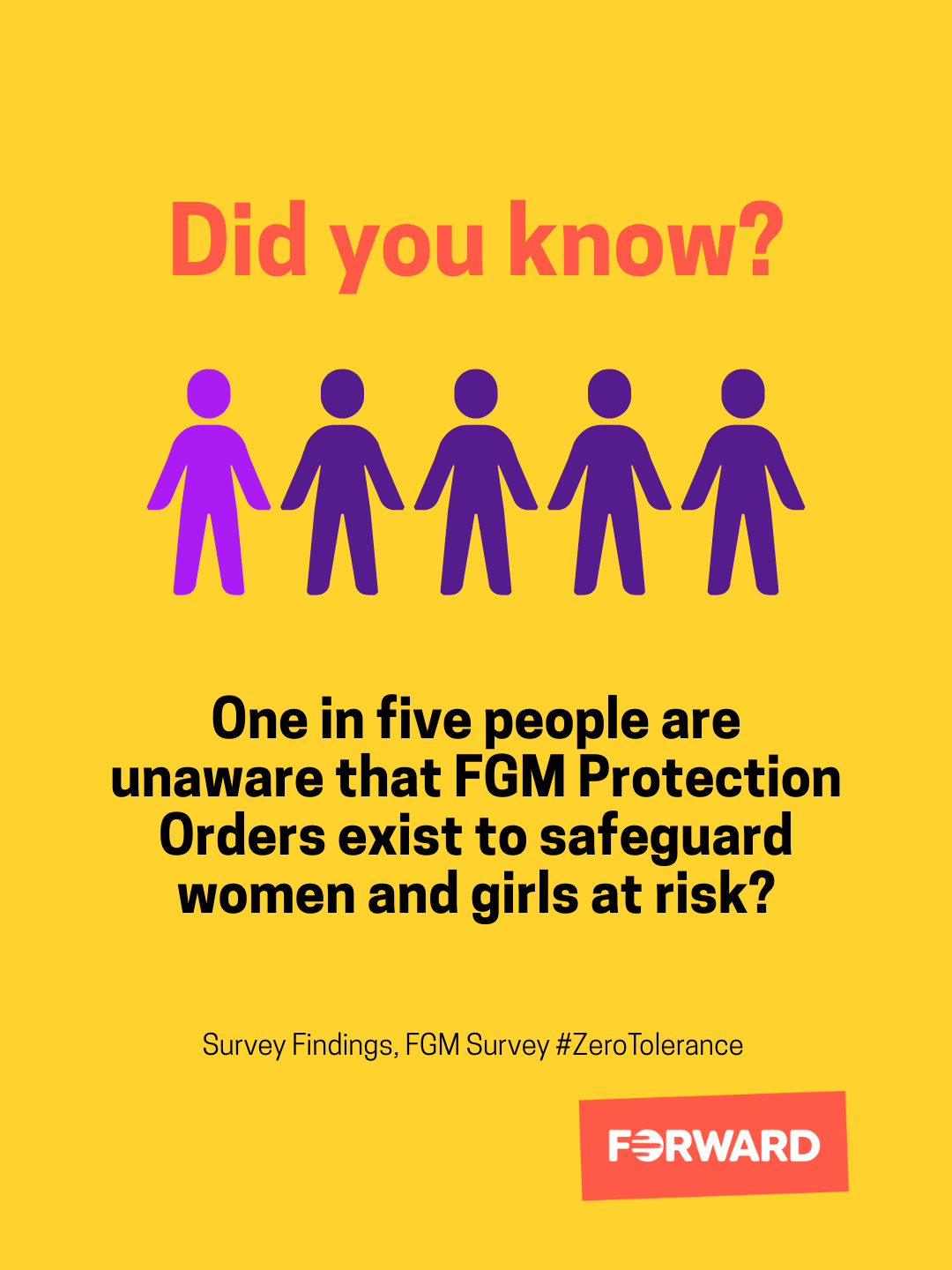
Female Genital Mutilation (FGM) remains a critical safeguarding, public health, and human rights concern in the United Kingdom. Despite decades of legislative progress and the introduction of robust protective measures, including the criminalisation of FGM and the availability of FGM Protection Orders, evidence suggests that significant gaps persist in public understanding, service accessibility, and community engagement. To better understand current levels of awareness and the lived realities surrounding FGM, FORWARD conducted the Public Awareness on FGM and Support Services survey between December 2025 and January 2026.
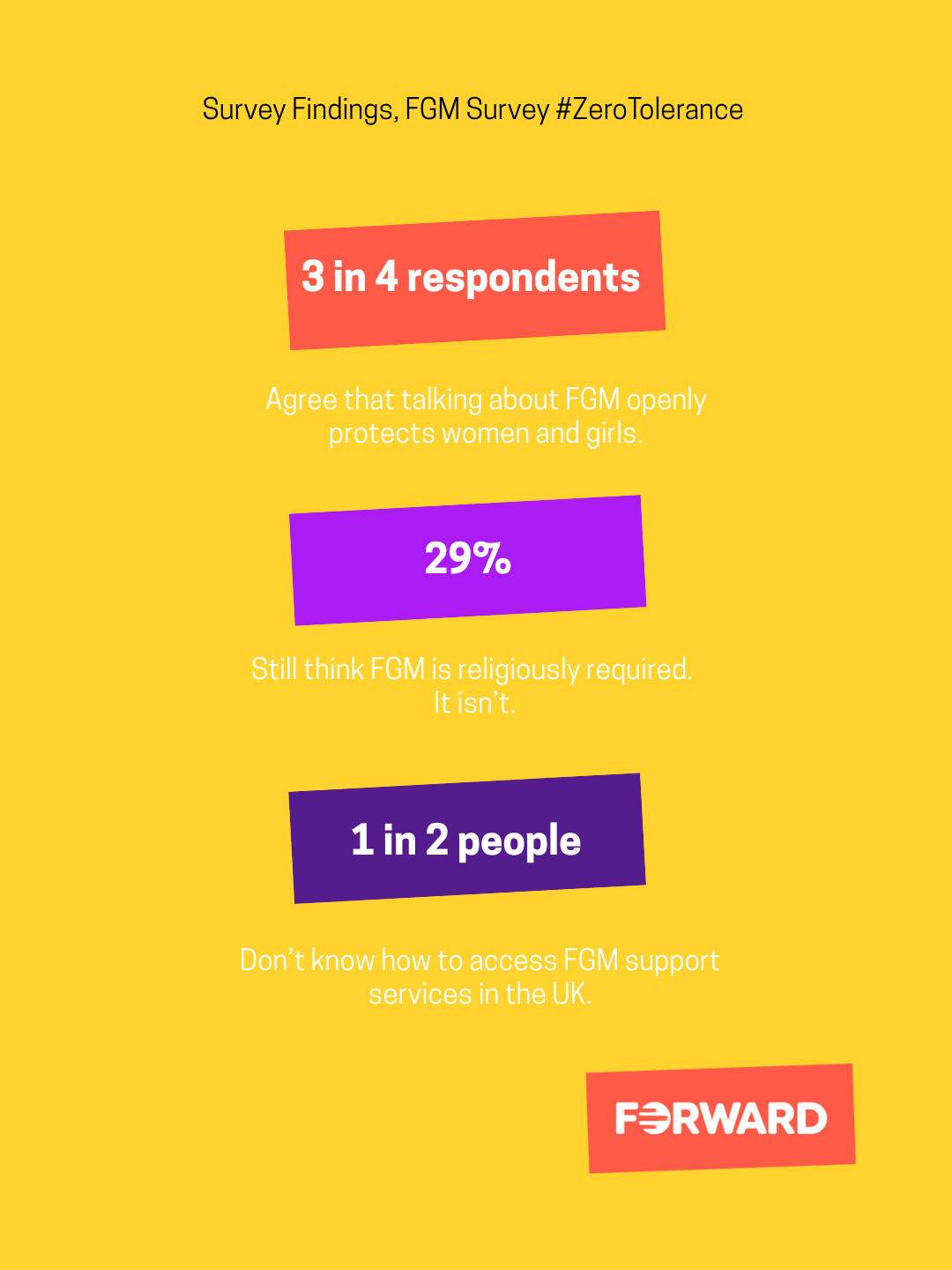
The survey gathered responses from over 200 individuals across all UK regions, representing diverse backgrounds including age groups and professional sectors. While awareness of the illegality of FGM was high, with 96% of respondents recognising that FGM is a criminal offence, the findings also revealed uneven levels of understanding about the practice, inconsistent knowledge of support services, and widespread uncertainty about how safeguarding mechanisms operate. Only half of the respondents knew how to access specialist services, and many highlighted barriers such as stigma, cultural pressure, fear of judgement, distrust of professionals, and concerns about child protection involvement.
The findings illustrate a clear gap between the legal framework and the experiences of survivors, families, and communities. They also highlight the essential but often under-resourced role of community organisations in bridging trust, raising awareness, and supporting disclosure.
- 95% of people recognise FGM is violence.
- When communities don’t know where help exists, girls and women remain at risk, and survivors stay silent. Raising awareness means increasing pathways to protection, early intervention and support.
- 1 in 3 people don’t know how to access FGM specialist services.
- Many respondents don’t know how to access specialist services, and some don’t know their rights. Clear and accessible information empowers communities to spot risks early and seek the right support.
- Stigma, silence, and lack of information are the biggest barriers to support.
- Raising awareness and improving services ensures no woman is left behind. Together we can work towards this.
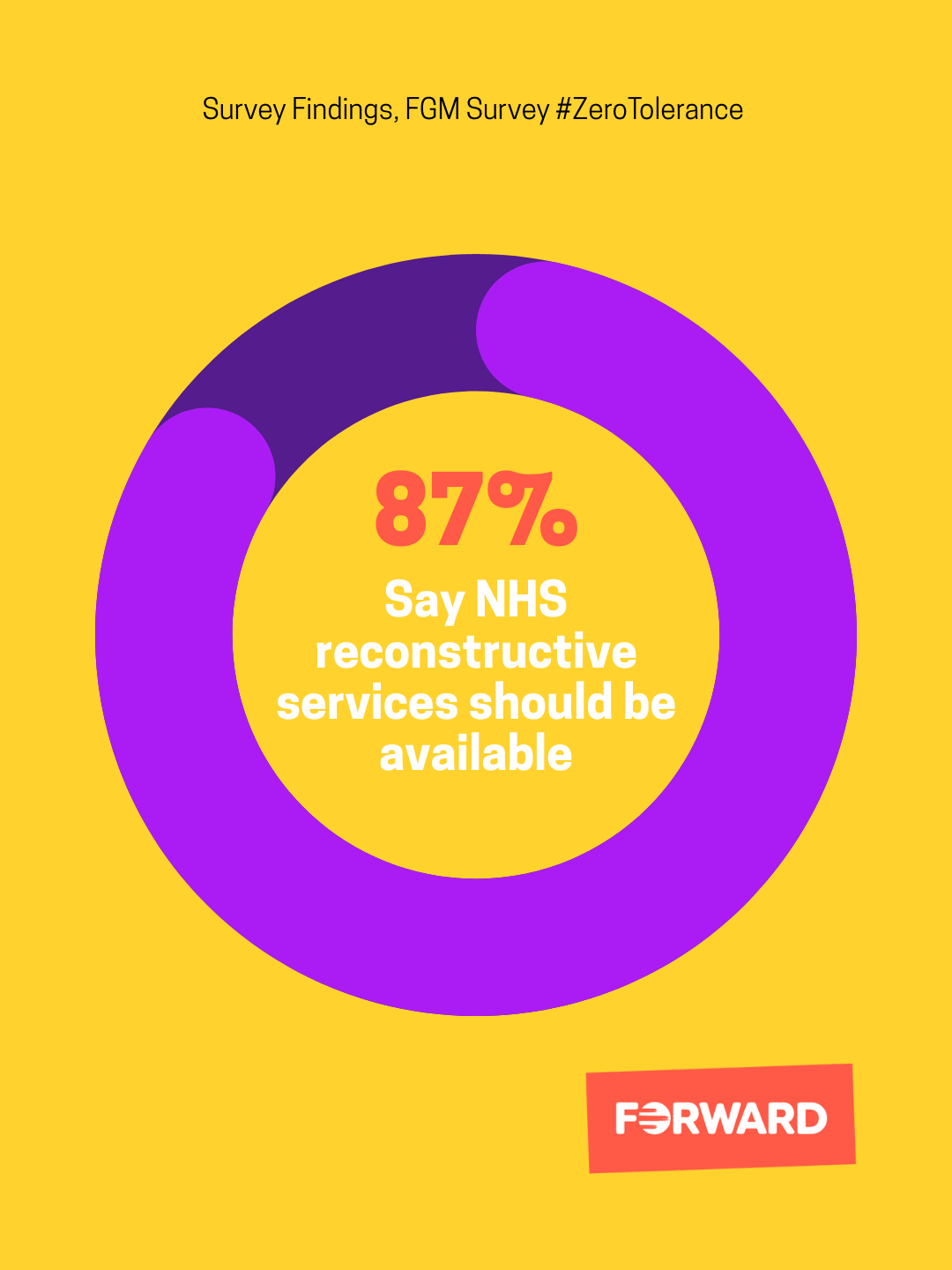
- 87% of the public want NHS reconstruction services for survivors.
- 87% of respondents believe NHS reconstruction should be available. For many survivors, it’s about physical healing, pain relief, and reclaiming autonomy over their own bodies.
- Talking openly about FGM protects women and girls.
- Over 90% of respondents agree that speaking openly about FGM protects girls. Silence allows harmful norms to continue unchallenged, but open conversations shift community attitudes and build courage to report concerns.
- Survivors deserve culturally competent, trauma‑informed care that is free from racism and judgment.
- Many highlighted racism, poor professional awareness, and the lack of cultural sensitivity as barriers. Changing that requires investment in training and specialist services because every survivor deserves to be heard, believed, and treated with dignity.
- Men are part of the solution.
- Communities identified engaging men, including leaders, educators, and advocates, as imperative in the movement against FGM. Community dialogues and male champions can shift norms.
- Over 90% say public awareness is essential to ending FGM.
- Teaching young people early helps dismantle myths, challenge stigma, and empower the next generation to recognise and resist harmful practices.
